

What Are Terpenes in Cannabis? A Beginner’s Guide
If you’ve ever opened a container of cannabis and noticed a strong citrus, pine, fruity, floral or earthy aroma, you’ve already experienced terpenes.
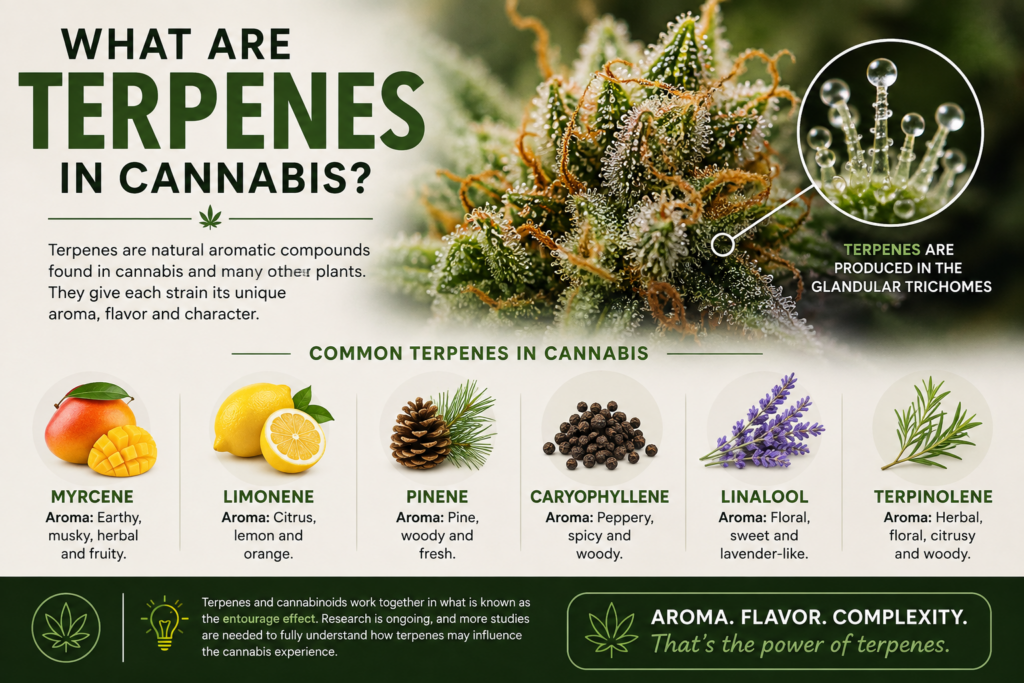
Terpenes are naturally occurring aromatic compounds found in cannabis and many other plants. They play a major role in giving different cannabis strains their distinctive smells and flavours.
That lemony scent in one strain and the earthy, peppery aroma in another? Terpenes are a big part of the reason why.
What Exactly Are Terpenes?
Terpenes are natural compounds produced by plants. They aren’t unique to cannabis—you encounter them all the time.
For example:
- Limonene is associated with the citrus aroma found in lemons and oranges.
- Pinene has the familiar scent of pine.
- Linalool contributes floral, lavender-like aromas.
- Caryophyllene has a spicy, peppery aroma.
- Myrcene is commonly described as earthy, musky or herbal.
Cannabis can contain many different terpenes, and the particular combination and concentration of these compounds helps create the aroma profile of each variety.
Where Are Terpenes Found on Cannabis?
Remember those tiny crystal-like structures called trichomes?
Terpenes and cannabinoids such as THC and CBD are produced and stored within the glandular trichomes of the cannabis plant.
This is one reason cannabis flower with abundant, well-preserved trichomes can be so aromatic.
If you haven’t already, check out our What Are Trichomes? guide to learn more about these tiny structures and why they’re important.
Common Terpenes Found in Cannabis
While cannabis can contain many terpenes, there are several you’ll see mentioned frequently.
Myrcene
Aroma: Earthy, musky, herbal and sometimes fruity.
Myrcene is commonly found in cannabis and also occurs naturally in plants such as hops.
Limonene
Aroma: Citrus, lemon and orange.
Limonene isn’t exclusive to cannabis. It’s also found in citrus fruits and is responsible for much of their recognizable citrus aroma.
Pinene
Aroma: Fresh pine, woody and resinous.
As the name suggests, pinene is associated with the familiar aroma of pine trees and other plants.
Caryophyllene
Aroma: Peppery, spicy and woody.
If you’ve ever noticed a cannabis strain with a strong black-pepper or clove-like aroma, caryophyllene may be contributing to that profile.
Linalool
Aroma: Floral, sweet and lavender-like.
Linalool occurs naturally in lavender and other aromatic plants and can contribute softer floral notes to cannabis.
Terpinolene
Aroma: Herbal, floral, citrusy and sometimes slightly woody.
Terpinolene can create a more complex aroma because it combines several different scent characteristics.
Do Terpenes Affect How Cannabis Feels?
This is where things get interesting—and where it’s important to separate what we know from what is still being researched.
You’ll often hear that individual terpenes produce specific effects or that terpenes and cannabinoids work together through something called the “entourage effect.”
Scientists are continuing to study this possibility, but there isn’t currently enough clinical evidence to say that a particular terpene will reliably produce a specific effect in people.
What we do know is that cannabis varieties can contain very different combinations and concentrations of cannabinoids and terpenes.
So instead of assuming that one terpene guarantees a particular experience, think of a terpene profile as another piece of information that can help you understand the characteristics of a cannabis variety.
Terpenes vs. THC and CBD
Terpenes and cannabinoids aren’t the same thing.
THC and CBD are cannabinoids, while myrcene, limonene, pinene and similar compounds are terpenes.
THC is the primary cannabinoid responsible for cannabis intoxication. CBD does not produce the same intoxicating “high.”
Terpenes, meanwhile, are particularly important to the plant’s aroma and flavour.
All of these compounds can exist together in the resin produced by cannabis trichomes.
Why Can Two Cannabis Strains Smell Completely Different?
Cannabis doesn’t have just one terpene.
Each variety can contain a different mixture and concentration of terpenes and other aromatic compounds. Those differences help explain why one flower might smell citrusy and sweet while another smells earthy, spicy or strongly herbal.
Growing conditions, genetics, harvesting, drying, curing and storage can also influence the final aroma of cannabis flower.
Terpenes are volatile compounds, meaning they can evaporate over time. Proper storage therefore helps preserve the aroma and overall quality of dried cannabis.
Are Indica and Sativa Enough to Describe Cannabis?
You’ve probably seen cannabis categorized as indica, sativa or hybrid, but those labels don’t tell you everything about the chemical composition of a particular product.
Looking at information such as cannabinoid content and terpene profile can provide additional details about what’s actually in the flower.
If you’re new to these terms, read our Indica vs. Sativa guide next.
The Bottom Line
Terpenes are one of the fascinating parts of the cannabis plant.
They’re responsible for much of the distinctive aroma associated with different cannabis varieties—from citrus and pine to floral, fruity, earthy and peppery notes.
While research continues into whether terpenes influence the effects of cannabis in other ways, their role in cannabis aroma is well established.
The next time you open a container of cannabis flower and notice its unique scent, you’re experiencing its complex mixture of terpenes and other aromatic compounds.
Keep Learning: Next, explore What Are Trichomes? and Indica vs. Sativa: What’s the Difference? to learn more about the cannabis plant.