

Indica vs. Sativa vs. Hybrid: What’s the Difference?
For years, cannabis has been grouped into three main categories: Indica, Sativa, and Hybrid. While these terms are still widely used by growers and consumers, modern cannabis is much more complex than these simple labels.
Understanding the differences between these categories can help you better understand how cannabis plants are classified and what to expect when shopping for flower.
What Is Indica?
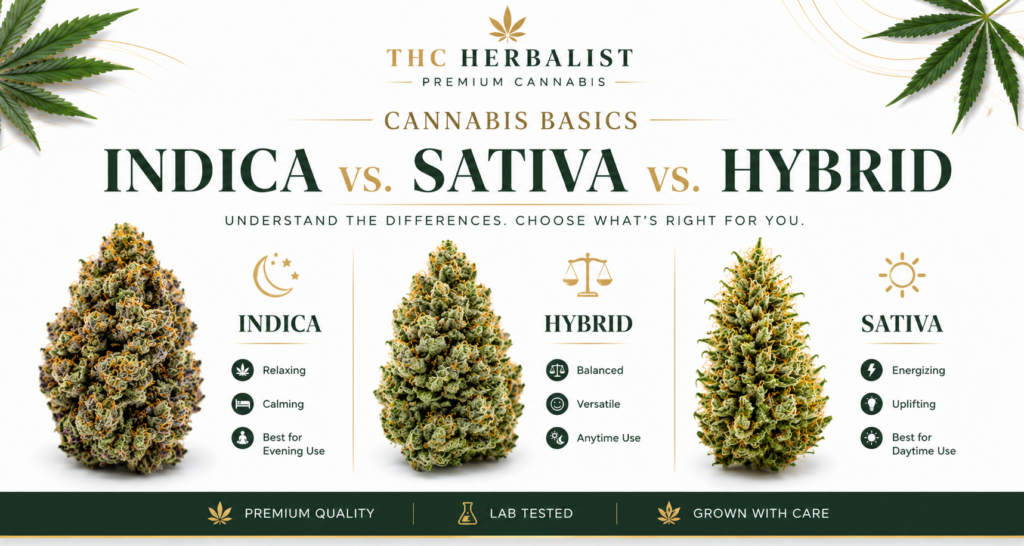
Indica plants are traditionally associated with regions such as Afghanistan, Pakistan, and northern India. They are generally shorter, bushier plants with broad leaves and dense flowers.
Many indica varieties are known for their compact bud structure and rich terpene profiles.
Common Characteristics
- Dense, compact buds
- Broad leaves
- Often shorter plants
- Rich earthy and herbal aromas
Popular indica strains include:
- Death Bubba
- Pink Kush
- Ice Cream Cake
- Tom Ford
What Is Sativa?
Sativa plants typically originate from warmer climates closer to the equator. They tend to grow taller with narrower leaves and produce longer, lighter flower structures.
Many sativa varieties are recognized for citrus, fruit, and tropical terpene profiles.
Common Characteristics
- Taller plants
- Narrow leaves
- Longer flower structure
- Bright citrus and fruity aromas
Popular sativa strains include:
- Sour Diesel
- Durban Poison
- Jack Herer
- Green Crack
What Is a Hybrid?
Most cannabis available today is actually a hybrid.
A hybrid is created by crossing different cannabis genetics to combine desirable characteristics from multiple parent plants. Some hybrids may lean more toward indica, while others lean toward sativa.
Because of extensive breeding over many decades, very few cannabis varieties today are considered completely pure indica or pure sativa.
Common Characteristics
- Combines traits from different cannabis genetics
- Wide range of aromas and flavours
- Dense or elongated bud structures depending on genetics
- Available in indica-leaning, balanced, or sativa-leaning varieties
Why the Labels Don’t Tell the Whole Story
Although “indica,” “sativa,” and “hybrid” are useful categories, they don’t fully describe how a particular flower may differ from another.
Today’s cannabis plants have been selectively bred for decades, making many modern strains genetically mixed.
That’s why experienced consumers often look beyond these labels and pay attention to factors such as:
- Terpene profile
- Cannabinoid content
- Aroma
- Flavour
- Cultivation quality
- Freshness
Understanding Terpenes
Terpenes are naturally occurring aromatic compounds found in cannabis and many other plants.
They contribute to each strain’s distinctive scent and flavour.
Some common cannabis terpenes include:
Myrcene
Often associated with earthy, musky aromas.
Limonene
Provides bright citrus notes.
Caryophyllene
Known for spicy, pepper-like aromas.
Pinene
Offers fresh pine aromas.
Linalool
Recognized for its floral scent.
You’ll find unique combinations of these terpenes in different cannabis cultivars, giving each one its own character.
Choosing the Right Flower
When selecting cannabis flower, consider more than whether it is labeled indica, sativa, or hybrid.
Look for:
✔ Dense, well-formed buds
✔ Healthy trichome coverage
✔ Fresh aroma
✔ Proper curing
✔ Lab-tested products from reputable retailers
At THC Herbalist, we carefully select premium flower to ensure quality, freshness, and excellent bag appeal.
Frequently Asked Questions
Is indica always stronger than sativa?
Not necessarily. Potency depends on many factors, including the flower’s cannabinoid content, terpene profile, and cultivation practices—not simply whether it’s classified as indica or sativa.
Are hybrids common?
Yes. Most cannabis strains available today are hybrids with varying genetic backgrounds.
Why do some buds look purple?
Purple colouring can result from genetics or environmental conditions during cultivation. Many premium strains naturally develop beautiful purple hues.
Does appearance matter?
A healthy appearance—including dense buds, vibrant colours, and visible trichomes—can indicate careful cultivation and curing. However, appearance alone doesn’t determine overall quality.
Final Thoughts
While Indica, Sativa, and Hybrid remain useful ways to describe cannabis, they are only one part of the picture.
Learning about terpene profiles, cultivation methods, and flower quality can give you a more complete understanding of what makes each strain unique.
Whether you’re exploring classic indicas like Death Bubba, Pink Kush, Tom Ford, and Ice Cream Cake, or trying a balanced hybrid, choosing high-quality, properly cured flower is key to an enjoyable experience.